
Uncategorized
BPC-157 vs TB-500: Comparing Two of the Most-Studied Research Peptides
Jul
Two Compounds, One Research Category
BPC-157 and TB-500 are consistently the two most-ordered compounds in tissue-repair research, and they are frequently studied together — but they are not interchangeable, and they do not work through the same mechanism. This guide breaks down what separates them, where their research profiles overlap, and how researchers typically approach study design when working with both.
What Is BPC-157?
BPC-157 is a synthetic pentadecapeptide — a 15-amino-acid chain — derived from a fragment identified within a naturally occurring protein found in gastric juice. It has become one of the most extensively referenced peptides in angiogenesis and tissue-repair research literature, largely due to its resistance to enzymatic degradation, which gives researchers a more stable compound to work with across repeated experimental conditions. Full detail on its research profile, purity testing, and storage is available on our BPC-157 5mg product page.
What Is TB-500?
TB-500 is a synthetic fragment derived from Thymosin Beta-4 (TB4), a protein naturally present at high concentrations in platelets and wound-repair tissue. Where BPC-157 is a wholly synthetic sequence inspired by a gastric-protective fragment, TB-500 isolates the biologically active region of a much larger, naturally abundant structural protein. Full research and testing details are on our TB-500 5mg product page.
Mechanism: Where They Actually Differ
This is the core distinction researchers need to understand before designing a comparative study:
| Aspect | BPC-157 | TB-500 |
|---|---|---|
| Origin | Fragment identified in gastric juice | Fragment of Thymosin Beta-4 |
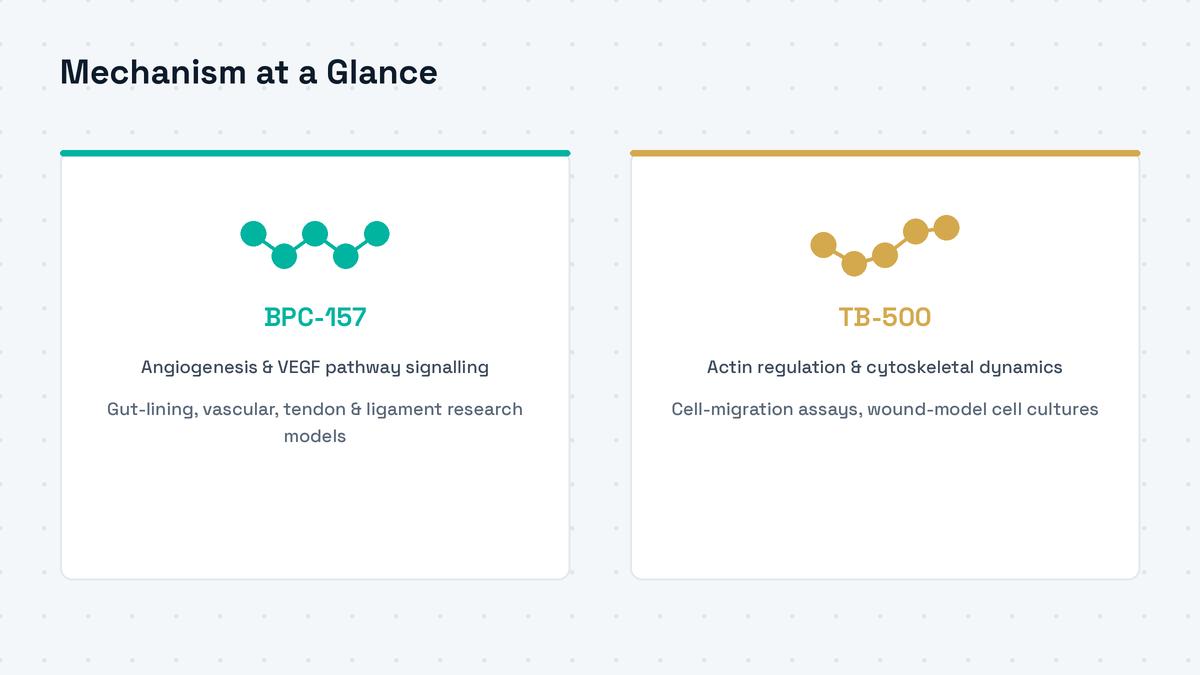
| Primary research mechanism | Angiogenesis, VEGF pathway signalling | Actin regulation, cytoskeletal dynamics |
| Common research models | Gut-lining, vascular, tendon/ligament models | Cell-migration assays, wound-model cultures |
| Structural class | Pentadecapeptide (15 amino acids) | Fragment of a much larger structural protein |
In simple terms: BPC-157’s research profile centres on blood-vessel formation and protective signalling, particularly in gut and connective-tissue models. TB-500’s research profile centres on actin — the protein responsible for cell shape and movement — making it more relevant to studies of cell migration specifically.
Why Are They Studied Together?
Because their mechanisms are different but complementary, many tissue-repair research protocols examine both compounds within the same study design — one influencing vascular and protective signalling, the other influencing cellular movement and structural repair. Comparative research has looked at whether combined study designs reveal additive effects that neither compound demonstrates independently, though this remains an active area of ongoing investigation rather than settled literature.
Purity & Testing Standards
Both compounds are supplied by ApexPure at a minimum of 99% purity, independently verified via HPLC by a third-party laboratory, with a batch-specific Certificate of Analysis available for download on each respective product page. Neither compound’s research validity holds up if the underlying material isn’t verified — this is true for any comparative study design, which is why we treat testing as non-negotiable across the entire catalogue. Full detail on our testing process is available on the Lab Testing & Certificates page.
Storage Considerations for Comparative Studies
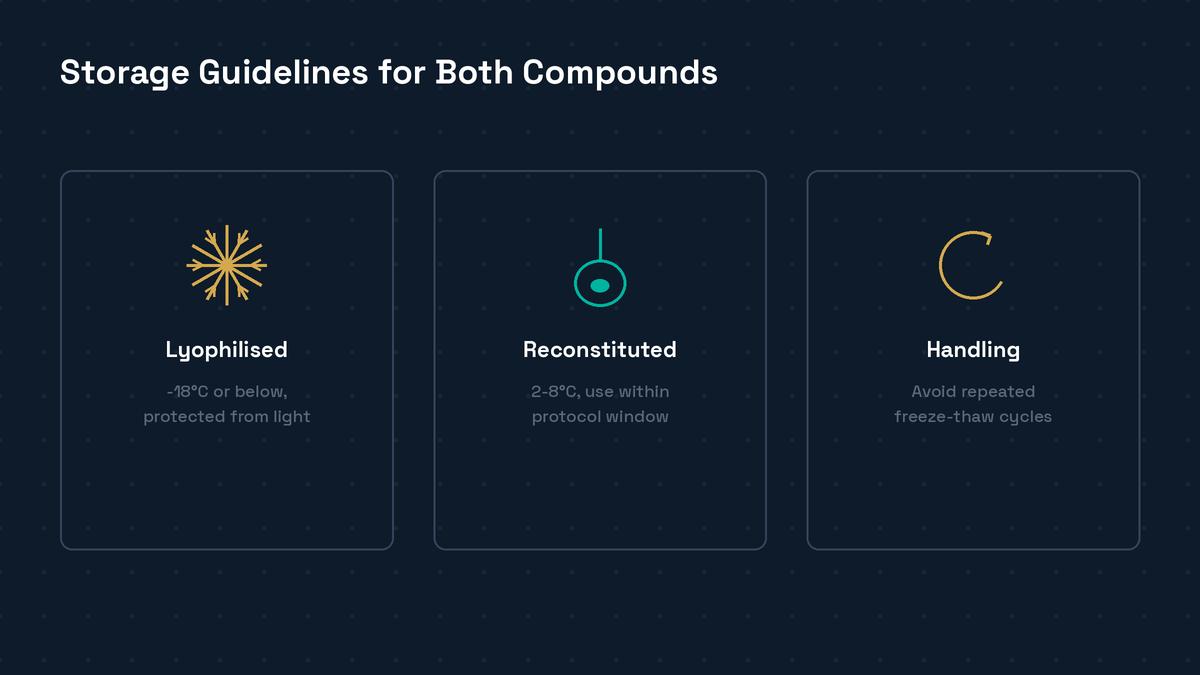
Both BPC-157 and TB-500 should be stored lyophilised at -18°C or below, protected from light, prior to reconstitution. Once reconstituted with bacteriostatic water, both should be refrigerated at 2–8°C and used within your laboratory’s defined protocol window. For comparative study designs running both compounds in parallel, maintaining consistent storage and reconstitution conditions across both is essential for isolating mechanism-based differences rather than introducing storage-related variability.
Frequently Asked Questions
Can BPC-157 and TB-500 be studied in the same protocol?
Yes — this is a common research design, given their complementary but distinct mechanisms. Researchers typically design such studies carefully to isolate the contribution of each compound.
Is one compound “stronger” than the other?
They aren’t directly comparable in that sense, as they act through different mechanisms. Which is more relevant depends entirely on the specific research question being investigated.
Are both compounds tested to the same purity standard at ApexPure?
Yes. Every batch of both compounds is independently HPLC-verified to a minimum of 99% purity, with matching Certificates of Analysis.
This article is provided for general research and informational purposes only. All compounds referenced are sold by ApexPure strictly for laboratory and in-vitro research use. Not for human or veterinary consumption, diagnostic, or therapeutic use.
