
Research Guides
Understanding Certificates of Analysis: What UK Researchers Should Look For
Jul
Why This Matters More Than Most Buyers Realise
Anyone can print “99% pure” on a label. The UK research peptide market has no shortage of suppliers making exactly that claim with nothing behind it. A Certificate of Analysis (COA) is the document that turns a purity claim into a verifiable fact — but only if you know what you’re actually looking at, and only if the supplier’s testing process is genuinely independent. This guide explains what a COA is, what it should contain, and the questions worth asking before you trust one.
What Is a Certificate of Analysis?
A Certificate of Analysis is a laboratory document produced after a sample from a specific production batch has been tested to confirm its identity and purity. For research peptides, this is typically done via High Performance Liquid Chromatography (HPLC), a method that separates the compounds present in a sample and measures them against a known reference standard. The output is a chromatogram — essentially a graph — showing how much of the sample matches the target compound, expressed as a purity percentage.
The Single Most Important Question: Who Did the Testing?
This is where most COAs in this market fall apart under scrutiny. A Certificate of Analysis is only meaningful if it was produced by a laboratory independent of the seller. A manufacturer testing its own product and publishing the result is not independent verification — it’s self-certification, and self-certification tells you nothing about whether the compound is what it claims to be.
When reviewing any COA, ask directly: was this test conducted by a third-party laboratory with no financial relationship to the seller? If a supplier can’t answer that clearly, treat the purity claim as unverified, regardless of what the certificate says.
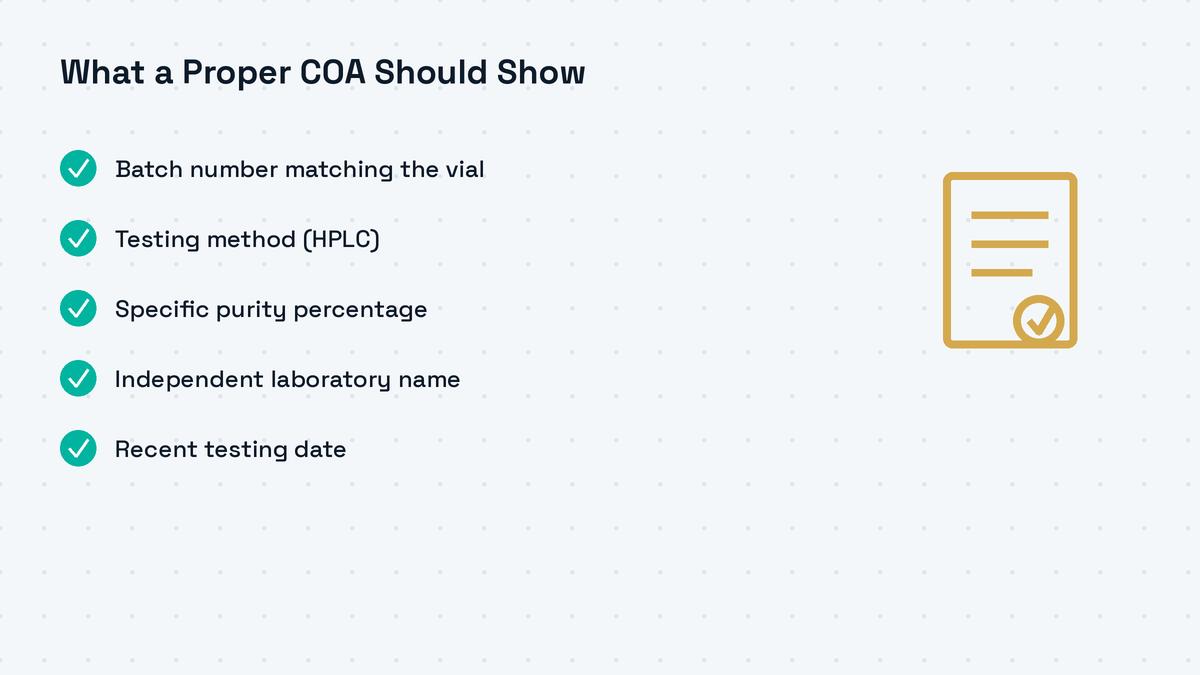
What a Proper COA Should Show
- Batch number — matching the number printed on the physical vial you receive, not a generic document reused across multiple production runs.
- Testing method — typically HPLC, sometimes supplemented with mass spectrometry for identity confirmation.
- Purity percentage — a specific figure, not a vague claim.
- Testing laboratory name — an identifiable, independent third party.
- Date of testing — recent relative to your purchase, not years old.
Red Flags to Watch For
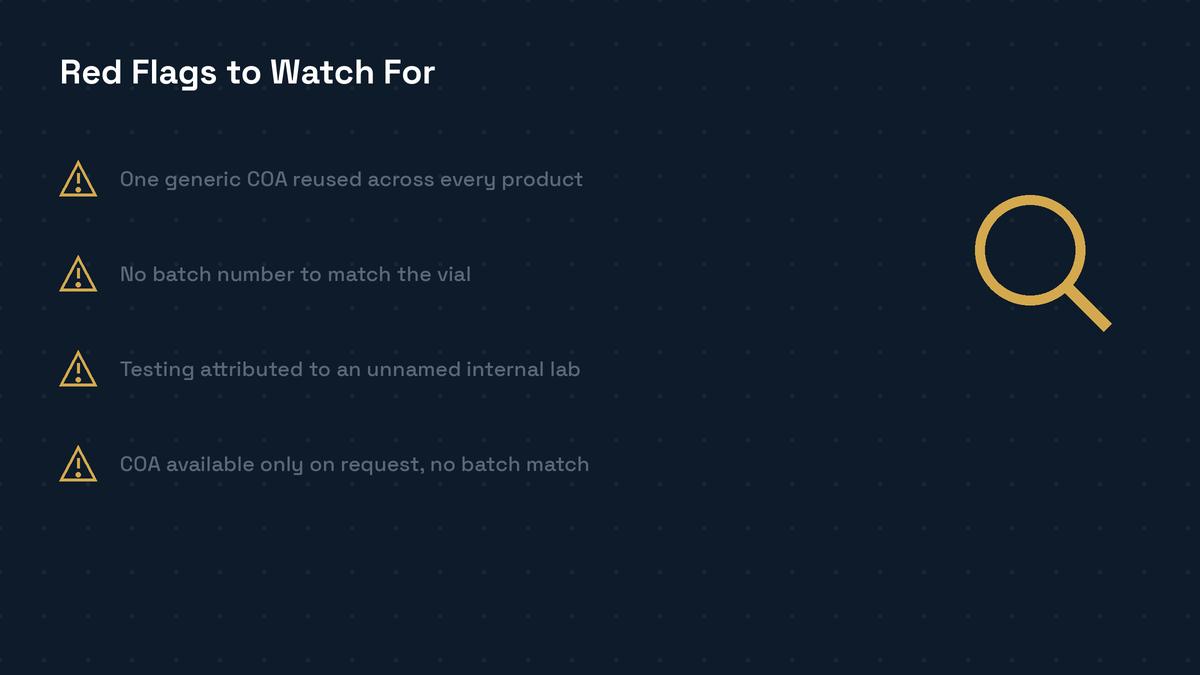
A few patterns are worth treating with real caution when sourcing UK research peptides:
- A single generic COA used across every product on a supplier’s site, regardless of compound or batch.
- No batch number on the certificate, or no way to match it to the vial you receive.
- Testing attributed to “our lab” or an unnamed internal facility rather than an identifiable independent laboratory.
- A COA available only on request, with no batch-matching process — meaning there’s no way to confirm the document relates to your specific order.
How ApexPure’s Testing Process Works
Every batch we sell is tested by an independent, third-party laboratory before it enters our inventory. Batches that don’t meet our 99%+ purity threshold are not released for sale. Each product page carries a downloadable, batch-specific Certificate of Analysis matched to the batch number printed on the vial — so there’s a direct, checkable link between the document and the material you receive, rather than a generic claim applied across the board. The full step-by-step process is laid out on our Lab Testing & Certificates page.
Why This Matters for Research Validity
Inconsistent or unverified purity between batches introduces a variable into experimental results that has nothing to do with the research question being studied. If a compound’s actual purity is unknown or inconsistent, any downstream data becomes harder to interpret with confidence. Independent, batch-specific testing removes that uncertainty, giving researchers a reliable baseline to build a study on.
Frequently Asked Questions
Is a Certificate of Analysis a safety certification?
No. A COA confirms identity and purity of the tested batch — it is not a safety or medical approval of any kind, and none of ApexPure’s compounds are approved for human or veterinary use.
Can I request a COA before I place an order?
Yes. Contact our team and we will share the current batch documentation for any product ahead of your purchase.
Do all UK peptide suppliers provide batch-specific COAs?
No — this varies significantly across the market. It’s one of the most important factors to check before choosing a supplier.
This article is provided for general research and informational purposes only. All compounds referenced are sold by ApexPure strictly for laboratory and in-vitro research use. Not for human or veterinary consumption, diagnostic, or therapeutic use.
